
Service area
Genotoxicity risk assessment of impurities
Mutagenic impurities can be present at trace levels and still matter, so regulators expect them to be identified, classified and controlled with a clear scientific rationale. We help you work through ICH M7 — from listing potential impurities and running (Q)SAR predictions to setting acceptable intakes and control strategies — and we assess extractables, leachables and non-mutagenic impurities as well.
Services in this area
5 defined services
Each service has a clear scope, deliverables and list of the information we need. Choose a service for details.
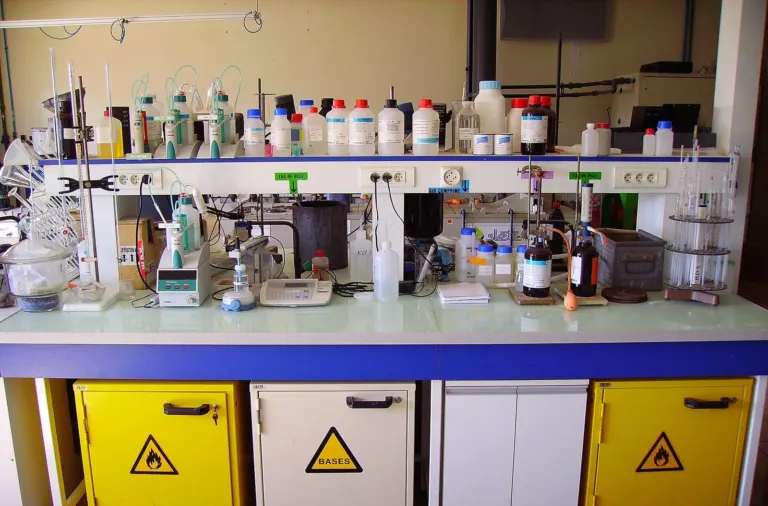
Advanced Impurity Profiling
Systematic identification of actual and potential impurities from the synthetic route, reagents and degradation — the starting point for ICH M7 and Q3A/Q3B.
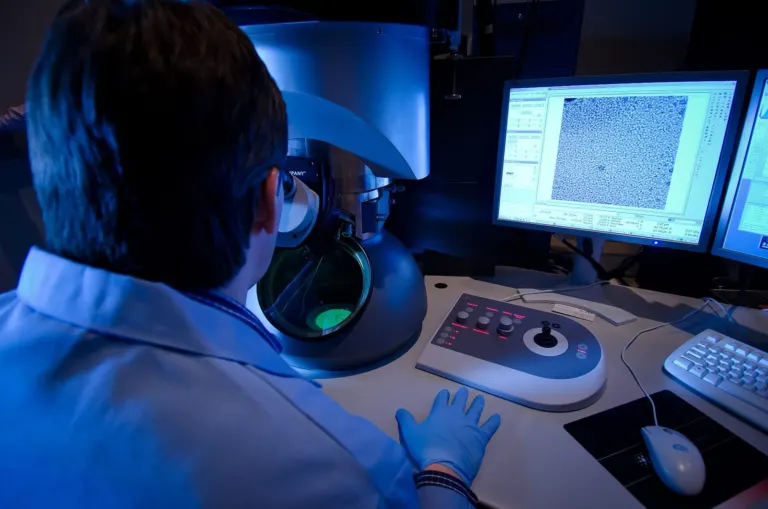
In Silico QSAR Assessment
Two complementary (Q)SAR predictions per structure with documented expert review, as required by ICH M7.
Extractables & Leachables
Study design input, analytical-threshold setting and toxicological safety assessment of extractables and leachables from packaging, devices and process equipment.
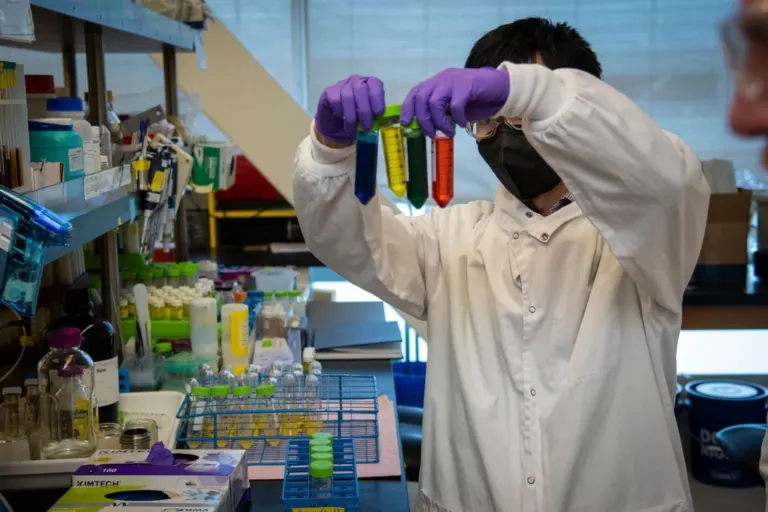
Toxicological Risk Assessments
Toxicological qualification of non-mutagenic impurities, degradants, residual solvents, elemental impurities and leachables — plus safety evaluations for regulatory queries.
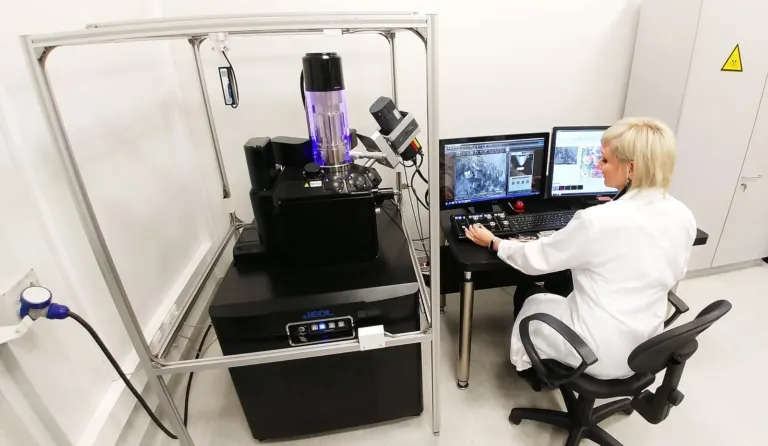
Genotoxicity Risk Assessment
End-to-end ICH M7 assessments: classification, acceptable intakes, nitrosamine (CPCA) evaluation and control strategies ready for submission.
Typical situations
When companies come to us
Preparing a dossier or DMF
Module 3 needs a documented assessment of actual and potential mutagenic impurities and the control strategy.
Responding to a regulatory query
Authorities may ask for (Q)SAR outputs, expert review or justification of specification limits.
Changing the synthetic route
New reagents, solvents or intermediates can introduce new potential impurities.
Nitrosamine risk evaluation
Small-molecule nitrosamines and nitrosamine drug substance-related impurities (NDSRIs) need risk evaluation and acceptable intake limits.
New packaging or a device component
Extractables and leachables must be assessed for patient safety.
An impurity above its qualification threshold
Non-mutagenic impurities above ICH Q3A/Q3B thresholds require toxicological qualification.
Our approach
How we work in this area
Every engagement follows a documented sequence, so your team and reviewers can trace each conclusion back to its data.
- List the impuritiesStarting materials, reagents, intermediates, by-products and degradants are compiled from the route and stability data.
- Assess mutagenic potentialTwo complementary (Q)SAR methodologies plus expert review, alongside any experimental data.
- Classify under ICH M7Each impurity is assigned to one of the five ICH M7 classes.
- Set the acceptable intakeCompound-specific, class-specific (such as CPCA for nitrosamines) or TTC-based limits, adjusted for duration of treatment.
- Define the control strategyTesting, purge arguments or process controls, in line with ICH M7 options 1–4.
- Document for submissionA report structured to drop into the dossier or answer the query.
FAQs
Genotoxicity & Impurities: frequently asked questions
What does ICH M7 require?
ICH M7(R2) requires actual and potential impurities that might be mutagenic to be identified, assessed and controlled at levels associated with negligible cancer risk. It sets out (Q)SAR assessment, a five-class system, acceptable intakes and control options.
Do you run Ames tests?
No. Globaxa is a consultancy: we perform desk-based assessments and in silico predictions, and where an experimental test is needed we specify it and review the results from your chosen laboratory.
Can you help with nitrosamines?
Yes. We carry out nitrosamine risk evaluations, assign acceptable intakes using established limits or the Carcinogenic Potency Categorization Approach (CPCA), and help document confirmatory testing and control.
Which (Q)SAR tools do you use?
ICH M7 expects one expert rule-based and one statistical methodology. We confirm the specific systems and versions during scoping and report them in full in every assessment.
Not sure which service fits?
Describe your product and the question you need answered. We will recommend the right scope — or tell you if it is outside ours.
- OfficeFlat no 8-9-3/23/1, Subhash Chandra Bose Colony, Dathunagar, Kanchanbagh, Hyderabad, Telangana 500058, India
Open in Google Maps - Phone+91 81219 33381
+91 99894 74590 - Emailbd@globaxa.in
- Office hoursMonday to Friday, 10:00–19:00 IST