
Service area
ADE/PDE, OEL and cleaning validation solutions
Shared equipment and multi-product facilities need limits that are scientifically justified and defensible at inspection. We derive health-based exposure limits (HBELs) — permitted daily exposure (PDE) or acceptable daily exposure (ADE) values — and occupational exposure limits (OEL), then help you turn them into a cleaning validation programme that stands up to review.
Services in this area
6 defined services
Each service has a clear scope, deliverables and list of the information we need. Choose a service for details.
Comprehensive Cleaning Validation
Programme-level support: HBEL-based limits, product grouping, worst-case selection and a lifecycle approach to cleaning validation.
ADE/PDE/OEL Calculation
Signed health-based exposure limit monographs — PDE/ADE for cleaning validation and OEL for worker protection — with a transparent rationale.
OEL Determination & Exposure Assessment
Occupational exposure limits for APIs and potent compounds, compared with expected or measured exposure to guide containment decisions.
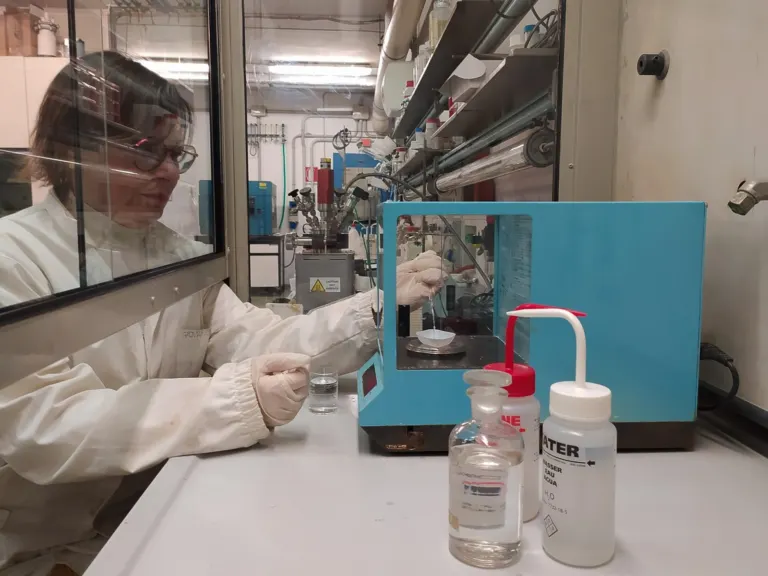
OEB Assessment & Banding
Hazard-based banding for APIs and intermediates with limited data, linked to practical handling and containment requirements.
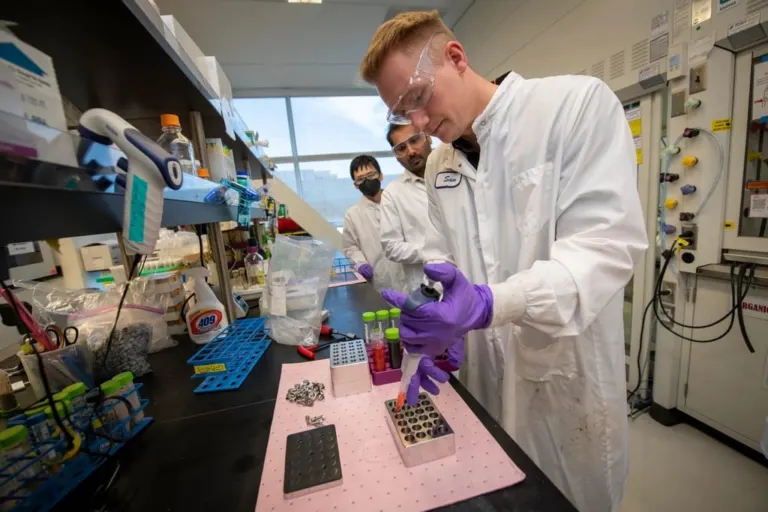
Cleaning Validation Protocols
Protocols, sampling plans, acceptance criteria, reports and deviation support for cleaning validation studies.

Toxicological Risk Assessment Reports
Toxicological assessments for cleaning agents, intermediates, degradation products and cross-contamination events in shared facilities.
Typical situations
When companies come to us
Introducing a product into a shared facility
Each new product can change the worst case. Health-based limits and carry-over calculations should be reassessed before the first commercial batch.
Preparing for a GMP inspection
Inspectors routinely ask how cleaning limits were derived. Limits based only on 1/1000 of the dose or 10 ppm may need an HBEL-based justification.
Highly potent or hazardous compounds
Cytotoxics, certain hormones, sensitisers and some biologics may need dedicated facilities or stricter controls. A documented toxicological assessment informs that decision.
Compounds with limited data
Intermediates and early-development APIs still need defensible limits. Occupational exposure banding and read-across help to bridge data gaps.
Modernising legacy cleaning validation
Moving from traditional acceptance criteria to HBEL-based limits, product grouping and a lifecycle approach to cleaning verification.
Worker-safety and containment decisions
Occupational limits and bands support engineering controls, personal protective equipment and industrial-hygiene monitoring.
Our approach
How we work in this area
Every engagement follows a documented sequence, so your team and reviewers can trace each conclusion back to its data.
- Map products and equipmentWe build the product–equipment matrix: doses, batch sizes, shared trains and surface areas.
- Review the toxicologyFor each compound we review clinical, non-clinical and regulatory data to identify the critical effect.
- Derive and document limitsPDE/ADE and OEL values are derived with transparent adjustment factors and a signed expert rationale.
- Translate limits into acceptance criteriaHealth-based limits become maximum allowable carry-over (MACO) and surface or rinse limits.
- Support protocols and reportsWe prepare or review protocols, assess results and help close deviations.
- Keep the programme currentPeriodic review whenever products, equipment or new data change the picture.
FAQs
ADE/PDE, OEL & Cleaning Validation: frequently asked questions
What is the difference between a PDE and an ADE?
Both are health-based exposure limits: a daily dose that is unlikely to cause an adverse effect even if a person is exposed every day for a lifetime. “PDE” is the term used by the European Medicines Agency (EMA) and in ICH Q3C/Q3D; “ADE” is the term used in the ISPE Risk-MaPP guide. The derivation methods are closely aligned.
Are health-based exposure limits mandatory?
In the EU and PIC/S member countries, GMP requires that cross-contamination risks in shared facilities are assessed toxicologically, and the EMA guideline sets out how to derive HBELs. WHO guidance describes the same principle. Expectations and enforcement differ by authority, so we confirm what applies to your markets during scoping.
How long does a PDE or ADE report take?
It depends mainly on how much data exists for the compound and how many compounds are involved. Well-characterised marketed drugs are usually quicker than new chemical entities or intermediates. We agree a realistic timeline once we have reviewed your product list.
Can you work with our existing cleaning validation documents?
Yes. Many engagements start with a review of the current master plan, limits and reports. We identify gaps and update only what needs to change.
Not sure which service fits?
Describe your product and the question you need answered. We will recommend the right scope — or tell you if it is outside ours.
- OfficeFlat no 8-9-3/23/1, Subhash Chandra Bose Colony, Dathunagar, Kanchanbagh, Hyderabad, Telangana 500058, India
Open in Google Maps - Phone+91 81219 33381
+91 99894 74590 - Emailbd@globaxa.in
- Office hoursMonday to Friday, 10:00–19:00 IST